
No Body No Problem How to Play: Four-Player Basics
How No Body No Problem works: three suspects hide a body and clean evidence while one cop searches. Learn the round flow, roles, and first-match plan.
Quick answer: No Body No Problem is a four-player online game. Three players are suspects who must hide a body, remove evidence, and act normal; one player is a cop who searches the location and tries to find the body. Suspects win by getting rid of the body and evidence before the police search exposes them. The cop wins by finding the body and reading the scene.
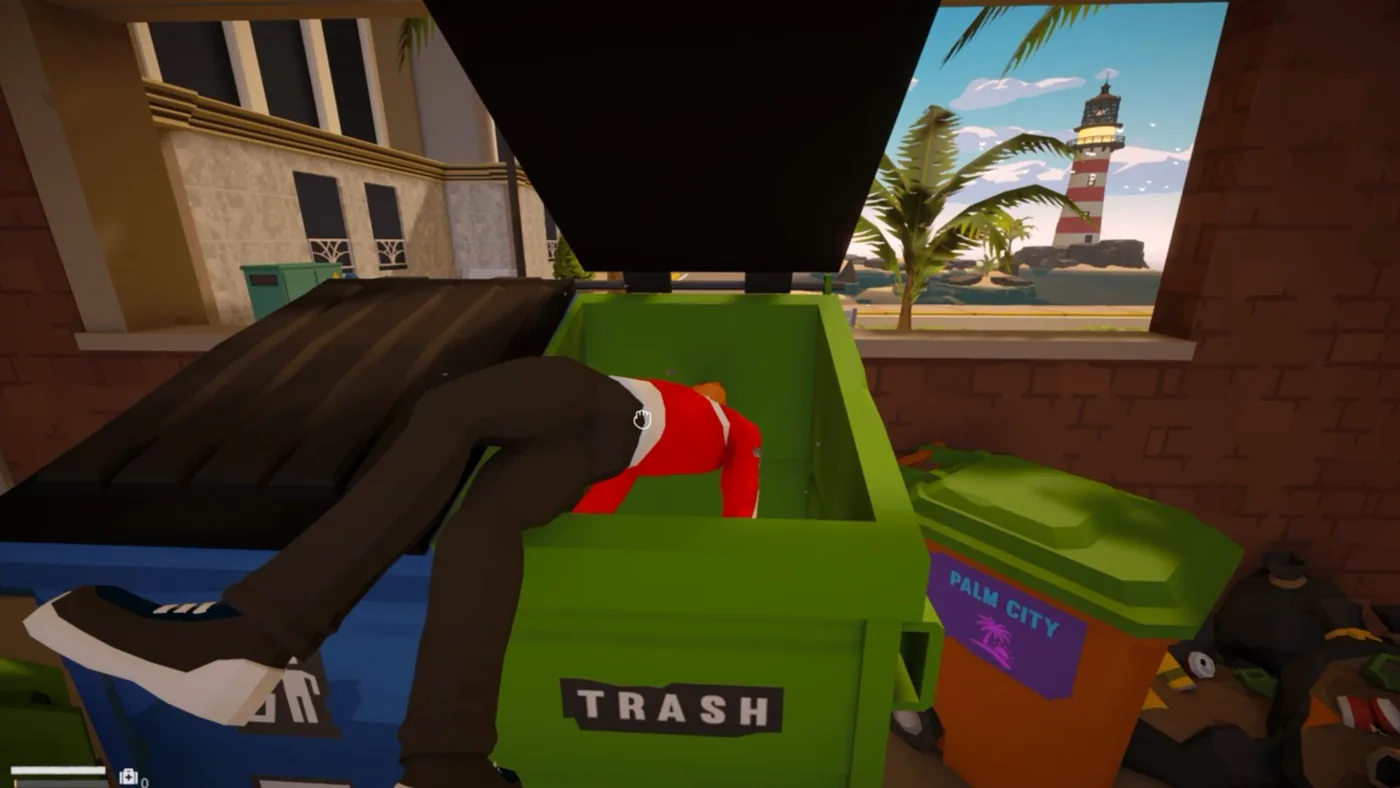
The twist is that the body is a physical object. It knocks over furniture, gets stuck in doorways, and takes time to move. You are not clicking a menu to make evidence disappear; you are carrying an awkward object through a house while a friend listens for the noise.
The four-player setup
Every round uses the same cast: three suspects and one cop. The roles are asymmetric, so the two sides are not trying to do the same thing with different skins.
| Role | Players | Job | Main risk |
|---|---|---|---|
| Suspect | 3 | Hide the body, clean evidence, avoid suspicion | Being seen carrying or cleaning |
| Cop | 1 | Search the location, find the body, read clues | Being misled by a clean scene |
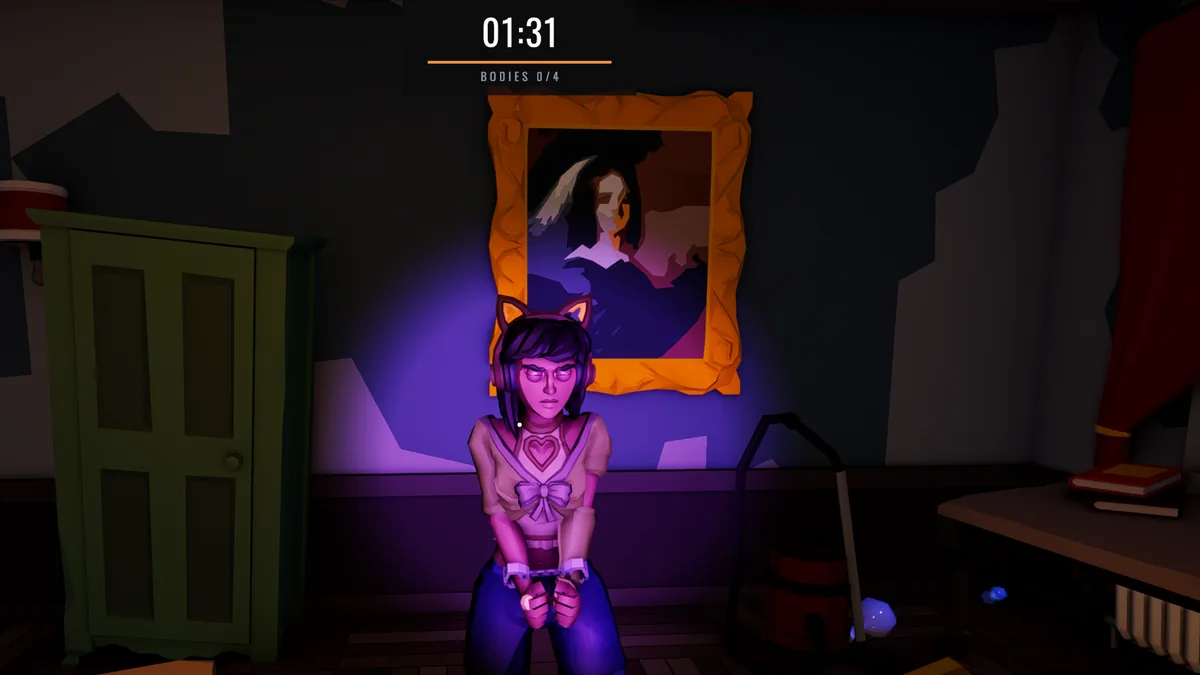
The cop is not a monster with a gun and infinite authority. The role is closer to a detective with tools: handcuffs, a UV flashlight, a knife, and a firearm appear in the official HUD screenshot. The suspects are not helpless either. They can slap, move objects, and coordinate. The balance comes from information, not raw damage.
The round flow
A round moves through four phases. The exact timer values can change between builds, but the structure is consistent with the official patch notes.
- Setup. Everyone spawns into the location. The suspects know where the body is; the cop does not.
- The hidden timer. The HUD shows a countdown such as "OOPS... COPS IN 02:11" for suspects. That is the window before the police pressure arrives.
- The search. The cop moves through the location, checks rooms, and looks for inconsistencies. Suspects move the body, clean, or create a distraction.
- The resolution. The body is found or the suspects get it out of the way. The scene is read, and the round ends.
The timer is the spine of the round. Suspects who spend the first minute arguing about where to put the body lose the minute they needed to move it. The police arrival timer guide→ breaks down the countdown and the 30-second arrival sequence.
The countdown is visible on the suspect HUD. If you are still standing over the body when it reaches zero, you have already lost the initiative. Move first, refine the plan second.
What suspects actually do
The suspect job has three parts, and they compete for the same seconds.
Hide the body. Pick a container or a concealed space and commit to it. The backyard has a grill, bushes, a shed, and a pool area; the indoor maps have bedrooms, closets, and furniture. A body in the open is a loss. A body in a bad hiding spot is a delayed loss.
Remove evidence. Blood, drag marks, and disturbed objects are clues. The cop notices a freshly cleaned floor, an open door, or a broken object. Cleaning one obvious patch can be worse than leaving a smaller, less suspicious mess if the clean patch is in the middle of the room.
Act normal. This is the social layer. If you are sprinting away from a bedroom, the cop does not need to find the body to know something is wrong. Walk, talk, and give the cop a reason to search somewhere else.
The three suspects should not do the same job at the same time. A useful split is one carrier, one cleaner, and one talker who stays near the cop and reports the search route. That is coordination, not a locked class system; anyone can pick up the body.
What the cop actually does
The cop's job is to turn the environment into information. The official description lists the tells: an open door, a broken object, a freshly cleaned floor, and strange behavior. The cop's tools support that reading.
- UV flashlight reveals residue that normal light hides.
- Handcuffs stop a suspect from carrying or using items for a short window.
- Knife and gun are lethal options, but a dead suspect cannot explain the scene.
- Radio and siren add pressure and can be heard from a distance.
The cop should search in a route, not at random. Start at the edge of the location, work inward, and check the places a body could physically fit. A closet with a closed door is a different clue from a closet with a door that will not close.
A cop who checks one room perfectly and ignores the hallway misses the drag marks that connect the body to the room. Follow the path a carrier would take.
Your first match: a simple plan
For the first round, do not try to be clever. Use a plan that survives contact with the physics.
- Suspects: pick the nearest container, move the body immediately, then clean the path you used rather than the whole room.
- Cop: announce a search direction, watch who moves away from it, and check the rooms behind you.
- Everyone: use voice chat. The game is built around four people talking, and the official description leans on panic and betrayal as part of the experience.
The beginner tips page→ has ten specific habits, and the controls page→ covers the HUD bindings you need on day one.
Official source: No Body No Problem on Steam ↗
Official source: Hand Cuffing Update patch notes ↗
Official source: PlayStation Store concept page ↗
FAQ
How many players are in a No Body No Problem match?
Four: three suspects and one cop. The game is built for online multiplayer, not a single-player campaign.
Can you play No Body No Problem solo?
No solo mode has been announced. The store page describes a four-player experience, and the roles only make sense with a full lobby.
Do suspects know where the body is?
Yes. The suspects start with the body and have to deal with it. The cop is the one who has to find it.
What happens if the cop finds the body?
The suspects are done for. The official description says there is only one rule: if the body is found, the suspects lose the round.
Is there a tutorial?
No standalone tutorial has been announced. The store page and patch notes explain the loop, and the first match is the real tutorial.
More No Body No Problem Wiki Guides
No Body No Problem Clean Evidence Guide
How to clean evidence in No Body No Problem: work backward from the body, clean the carry route, avoid the fresh-patch tell, and leave the room looking normal.
No Body No Problem Co-Op: Friends and Private Lobbies
No Body No Problem co-op is online four-player play with three suspects working together against one cop. Private codes and role rotation help a group.
No Body No Problem Controls and Keybinds
No Body No Problem controls: 1-5 select hand, knife, gun, handcuffs, and UV light; G drops, H grabs the radio, V talks, B emotes, and hold to cuff.
No Body No Problem Cop Guide
How to play the cop in No Body No Problem: search the edges, read doors and clean patches, use the UV light and cuffs, and pressure suspects without guessing.
No Body No Problem Demo: What Happened
A free No Body No Problem demo was announced on October 16, 2026, but its Steam page is not reliably visible now. Here is what the demo showed and how to check.
No Body No Problem Gameplay Explained
No Body No Problem gameplay is physics-based social stealth for four players: three suspects hide a body while one cop reads the scene. Here is the loop.
No Body No Problem Hide Body Strategy
A practical No Body No Problem hide body strategy: scout the route, pick the container, carry in short legs, clean the trail, and keep a fallback spot.
No Body No Problem Hiding Spots by Map
The best No Body No Problem hiding spots by location: apartment closets, shop shelves, car park vehicles, and the suburban grill, shed, bushes, and pool area.